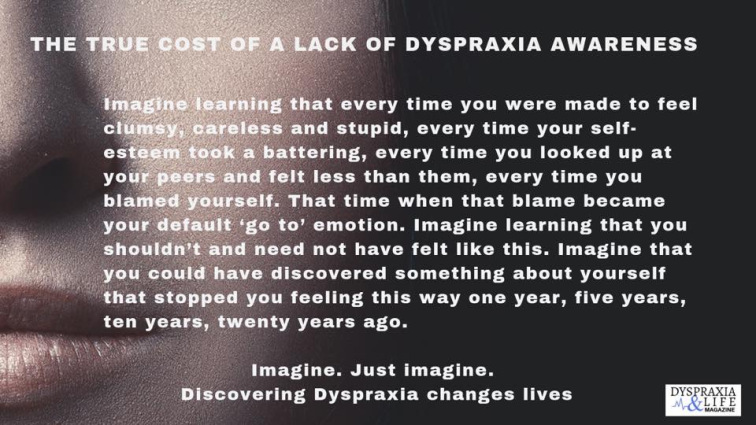
let’s be aware of and make people aware of Dyspraxia and lets stop people going through life unaware that they have Dyspraxia
what is Dyspraxia:
According to the Dyspraxia Foundation, “Dyspraxia is generally recognized to be an impairment or immaturity of the organization of movement. Associated with this may be problems of language, perception and thought. Other names for Dyspraxic include Clumsy Child Syndrome; Developmental Co-ordination Disorder (DCD); Minimal Brain Dysfunction: Motor learning Difficulty; and Pereceptuo-motor Dysfunction.”.
How does it affect someone who has this condition?
Everybody with this condition don’t have the same symptoms, but the symptoms can range from, bad coordination and balance, Sensitive to sensory stimulation (including high levels of noise, tactile defensiveness, wearing new clothes), gets lost in new places,Tendency to become easily distressed and emotional, not knowing left from right, bad short term memory, awkwardness in social situations, Poor fine motor skills. Difficulty in holding a pencil or using scissors. Drawings may appear immature, bad time keeping (the person is late or misses appointments) and bad space awareness (sometimes they are not aware they are a 3d object).
everyday tasks such as tying shoe laces, dressing, driving, catching balls, hand writing, running, riding bikes, eating with a knife and fork are hard to do
Other symptoms can be crossovers or links to other conditions such ADHA or Dyslexia such as poor reading or maths problems.
Tips
if you or your child have the symptoms of Dyspraxia mentioned above Talk to your GP, health visitor or special needs co-ordinator if you think you or your child may have Dyspraxia.
if you are at University and you have symptoms of dyspraxia mentioned above go to The Disability support centre of your university, there you can be screened and extra help can be given to you to help you on your course.
If you are a parent, educator or just a friend and the recognise these signs in someone find out about dyspraxia so you can help them by checking out these websites make dyspraxia known these websites contain information how you can help to do this and about what dyspraxia is and how to detect the signs if someone has Dyspraxia
If you have Dyspraxia your self these websites have lots of good information on dyspraxia
https://dyspraxiafoundation.org.uk/
http://www.dyspraxiausa.org/
http://www.dyspraxialifemagazine.co.uk/

